
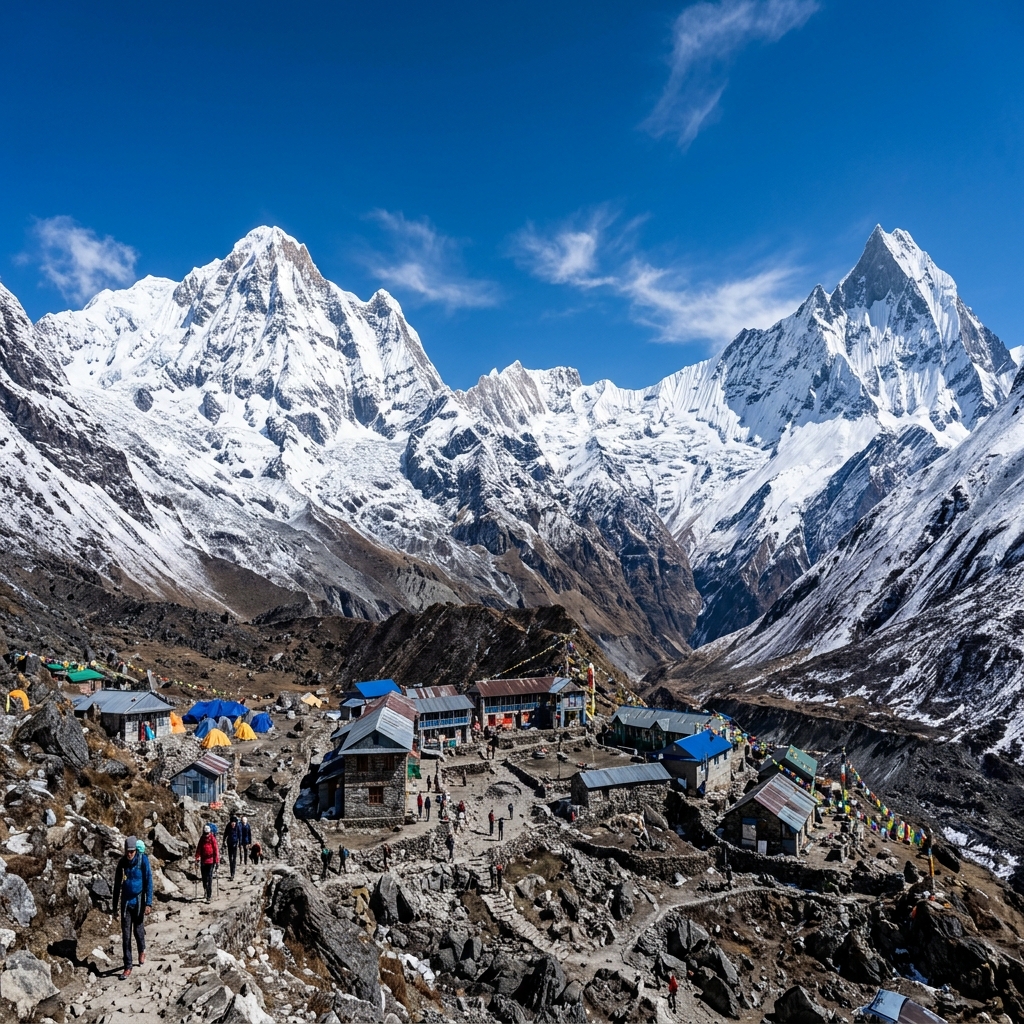
Whether you're doing the Annapurna Base Camp trek (7 days) or the full Annapurna Circuit (15+ days), what you carry can make or break your journey. This is the definitive gear checklist from our team.
Golden Rules
- Your pack should not exceed 8–10 kg (excluding water)
- Every item should have a purpose — cut ruthlessly
- Hire a porter for anything over 10 kg; don't risk your knees
Clothing — The Layer System
Temperature swings of 25°C between valley and high camp are normal in the Annapurna region. The layering system is not optional — it is survival strategy.
Base Layer (moisture-wicking)
- ✓ 2× merino wool or synthetic long-sleeve shirts
- ✓ 2× thermal underwear bottoms
- ✓ 4× trekking socks (wool blend)
- ✓ 3× moisture-wicking underwear
Mid Layer (insulation)
- ✓ 1× fleece jacket or mid-layer pullover
- ✓ 1× insulated down jacket (critical above 3,500 m)
- ✓ 1× trekking trousers (zip-off convertible recommended)
Outer Shell (wind & rain)
- ✓ 1× waterproof hardshell jacket (Gore-Tex or equivalent)
- ✓ 1× waterproof trousers
Accessories
- ✓ Warm beanie / wool hat
- ✓ Sun hat or wide-brim cap
- ✓ Neck gaiter / buff
- ✓ Lightweight gloves + warm insulated gloves
- ✓ UV-protective sunglasses (category 4)
Footwear
Your boots are your single most important piece of gear. Blisters on Day 2 can end a trek that took months to plan.
- ✓ Waterproof trekking boots — ankle support, worn-in before departure
- ✓ Lightweight camp sandals or Crocs (for teahouse evenings)
- ✓ Gaiters (for snow sections above 4,000 m in winter/spring)
- ✓ Blister prevention (Bodyglide or moleskin padding)
Boot Tip: Wear your trekking boots for at least 3–4 full days of hiking before your Nepal trip. Never arrive with brand-new boots.
Sleeping Bag & Gear
- ✓ Sleeping bag — rated to −10°C for high camps; teahouses provide blankets but not quilts at altitude
- ✓ Trekking poles (highly recommended, especially on descents)
- ✓ Daypack 25–30L with rain cover
- ✓ Main backpack or duffel for porter (50–60L)
- ✓ Headlamp + spare batteries (power cuts are common)
- ✓ Dry bags / zip-lock bags for electronics
Medical Kit
Important: Carry a personal medical kit regardless of whether you have a guide. Pharmacies are limited above Pokhara.
- ✓ Diamox (acetazolamide) for AMS prevention — consult your doctor
- ✓ Ibuprofen & paracetamol
- ✓ Diarrhea medication (Imodium, oral rehydration salts)
- ✓ Broad-spectrum antibiotics (doctor's prescription)
- ✓ Throat lozenges & antihistamines
- ✓ Bandages, antiseptic wipes, blister patches
- ✓ SPF 50+ sunscreen + lip balm with SPF
- ✓ Water purification tablets or Steripen UV purifier
Electronics & Documents
- ✓ Passport + photocopies (keep one in your daypack)
- ✓ TIMS card + ACAP / ANPAP permit
- ✓ Travel insurance documents (must include helicopter evacuation)
- ✓ Power bank (10,000 mAh minimum)
- ✓ Universal adapter + charging cables
- ✓ Offline maps downloaded (Maps.me or Gaia GPS)
- ✓ Camera with extra memory cards
What NOT to Bring
Overpacking is one of the most common trekking mistakes. Leave these at home or store them at your Pokhara hotel:
- Jeans or cotton trousers (heavy, slow to dry)
- Excessive toiletries — teahouses have basic supplies
- Multiple pairs of shoes
- Laptop (use your phone; weight matters at altitude)
Ready to Hit the Trail?
Our expert guides craft personalized itineraries to match your pace, fitness, and budget.