
Walking through a Sherpa village is a profoundly moving experience — if you know what you're looking at. This guide introduces you to the history, faith, food, and etiquette of the remarkable community that calls the high Himalayas home.
Origins: Who Are the Sherpas?
The word "Sherpa" (Tibetan: shar pa, meaning "people from the east") refers to an ethnic group that migrated from eastern Tibet to the Solukhumbu region of Nepal approximately 500 years ago. Today, roughly 150,000 Sherpas live in Nepal, with the largest concentration in the Khumbu Valley — the gateway to Everest.
Though "Sherpa" has become a generic term for any Himalayan mountain guide, it properly refers to members of this specific ethnic group. Many professional guides from other ethnic backgrounds (Rai, Tamang, Gurung) are technically not Sherpas, though all are equally skilled and respected.
Religion: Tibetan Buddhism on the Trail
Tibetan Buddhism permeates every aspect of Sherpa life and landscape. As you trek, you will constantly encounter its physical expressions:
- 🏔️ Mani walls: Long stone walls engraved with the mantra "Om Mani Padme Hum" — always pass to the left, keeping the wall on your right
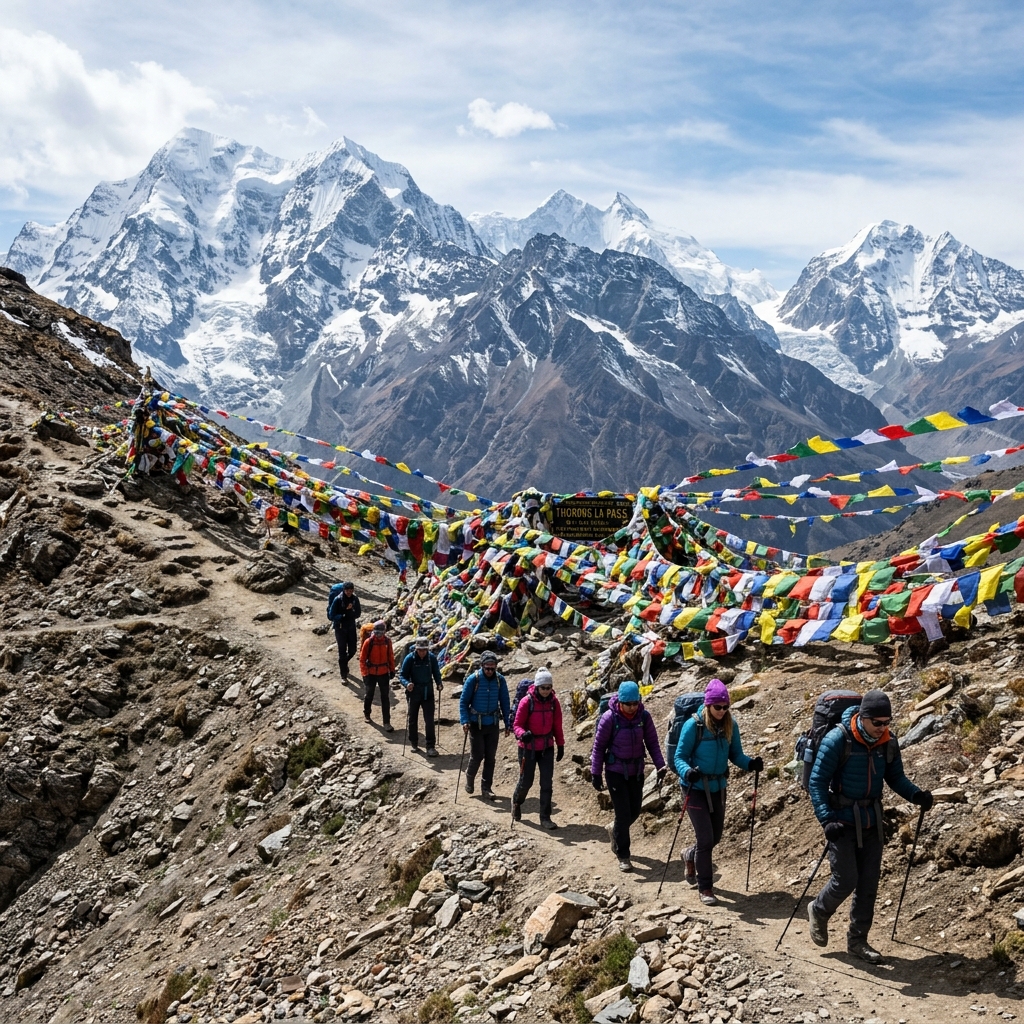
- 🎏 Prayer flags (lungta): Coloured flags strung between peaks and passes. Each colour represents an element; the wind carries prayers skyward. Avoid touching or stepping on fallen flags
- ⚪ Chortens / Stupas: Buddhist shrines — always walk clockwise around them
- 🎡 Prayer wheels: Spin them clockwise with your right hand — each spin sends prayers outward
- 🏛️ Gompas (monasteries): Remove shoes before entering. Ask permission before photographing monks or religious ceremonies
Sherpa Hospitality: The Teahouse as Home
The Sherpa concept of hospitality goes far beyond providing shelter. Guests are received as a gift — offering them tea is both a practical necessity at altitude and a deeply ingrained cultural expression of welcome. Accept the first cup of butter tea (Tibetan salt tea mixed with yak butter) graciously, even if the taste surprises you.
Inside a traditional Sherpa home, the kitchen is the sacred heart of the house — the most important room, centred around a wood or yak dung fire. You may be invited to sit near the fire; this is a significant gesture of trust and warmth. Always accept.
Traditional Food & Drink
- Tsampa: Roasted barley flour mixed with butter tea into a stiff dough — the original high-altitude fuel
- Butter tea (Bö-cha): Yak butter, salt, and black tea churned together — polarising for newcomers, but deeply warming at altitude
- Thukpa: Tibetan noodle soup with vegetables or meat — a warming staple at high-altitude teahouses
- Chang: Homemade barley beer — offered during festivals and social occasions
- Yak meat: Dried yak meat appears in many high-altitude dishes — denser and leaner than beef
Festivals Worth Planning Around
Dumji (June/July) is the most sacred Sherpa festival, celebrated with masked dances at gompas throughout the Khumbu. If you time your trek to coincide with Dumji at Namche or Thame, you'll witness something extraordinary.
Losar (Tibetan New Year, typically February/March) is celebrated with family gatherings, new clothes, and offerings at gompas — a quieter but deeply meaningful observance.
Cultural Do's and Don'ts
- ✓ Learn a few words of Nepali: "Namaste" (hello), "Dhanyabad" (thank you), "Bistaarai" (slowly/gently)
- ✓ Ask before photographing people — especially elders and children
- ✓ Dress modestly when entering monasteries (cover shoulders and knees)
- ✗ Do not offer cash or sweets directly to children — this fuels a begging culture that harms communities
- ✗ Do not touch religious objects, altars, or sacred offerings without invitation
- ✗ Do not step on the threshold of a doorway — always step over it
Ready to Hit the Trail?
Our expert guides craft personalized itineraries to match your pace, fitness, and budget.